


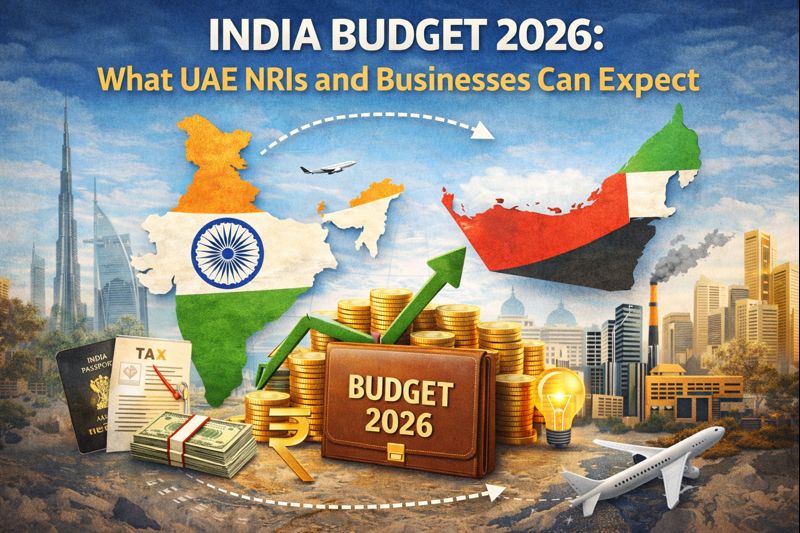
The Union Budget 2026–27, set for February 1, 2026, is crucial for UAE-based NRIs and overseas investors. It will focus on fiscal discipline, debt management, and economic stability under the “Viksit Bharat” roadmap. According to Mahendra Dev, Chairman of the Economic Advisory Council to the Prime Minister, the government plans to maintain the fiscal deficit
The Union Budget 2026–27, set for February 1, 2026, is crucial for UAE-based NRIs and overseas investors. It will focus on fiscal discipline, debt management, and economic stability under the “Viksit Bharat” roadmap.
According to Mahendra Dev, Chairman of the Economic Advisory Council to the Prime Minister, the government plans to maintain the fiscal deficit at 4.4% of GDP. Moreover, central and combined state debt is expected to decline in the long term. This ensures policy continuity and predictable economic planning for investors.
Encouraging Investment and Productivity
To achieve 7–8% growth, India needs to increase its investment rate from 30% to around 35%, combining public and private investment. Dev also emphasized improving capital efficiency and total factor productivity, which includes technology, innovation, and better use of infrastructure.
As a result, NRIs and overseas investors can expect continued support for infrastructure, manufacturing, and technology sectors.
Addressing Global Risks and Self-Reliance
Global risks, such as geopolitical tensions and trade uncertainties, remain significant. Therefore, India continues its Atmanirbhar Bharat strategy, focusing on domestic manufacturing and high-quality production. Reforms like GST, labour codes, FDI liberalisation, and private sector participation in nuclear energy further strengthen the economy.
Budget Day Timeline
Parliament will meet for the Budget Session 2026 from January 28 to April 2, divided into two phases. The Economic Survey is expected on January 29–30, while the Union Budget will be presented on February 1, which falls on a Sunday.
Business and Tax Expectations
EY India expects the Budget to sustain growth while ensuring fiscal discipline. The firm suggests expanding the Production-Linked Incentive (PLI) scheme to include sectors like AI, robotics, and space technology.
KPMG India recommends measures for salaried taxpayers, including raising the standard deduction to ₹100,000, extending timelines for filing returns, and allowing housing loan interest deductions under the new tax regime. Corporate reforms may include GST refund improvements, MAT relief, and clearer foreign company exemptions.
Focus on Jobs and Startups
Business leader TV Mohandas Pai emphasized job creation. With 2.5 crore youth entering the workforce annually, the Budget should expand the Kaushal scheme, create special employment districts, and incentivize companies to hire in underserved areas.
Pai also highlighted the need for more investment in startups and innovation, especially in AI, deep tech, and venture capital, to match global competitors like China and the US.
Implications for UAE NRIs
The Budget 2026 is expected to influence cross-border tax planning, real estate investment, startup funding, and portfolio management for NRIs. Key pillars include:
-
Fiscal discipline and debt control
-
Public and private investment growth
-
Tax certainty and reforms
-
Sector-specific incentives
-
Job creation and youth employment
-
Support for innovation and technology
Until the official proposals are released on February 1, NRIs and businesses should prepare for opportunities and policy changes.















Leave a Comment
Your email address will not be published. Required fields are marked with *